
Will MPs vote to criminalise their own lies? Commons decision today
Will MPs vote to criminalise their own lies? Commons decision today
PRESS RELEASE – EMBARGOED UNTIL 00.01, 14 JANUARY 2026
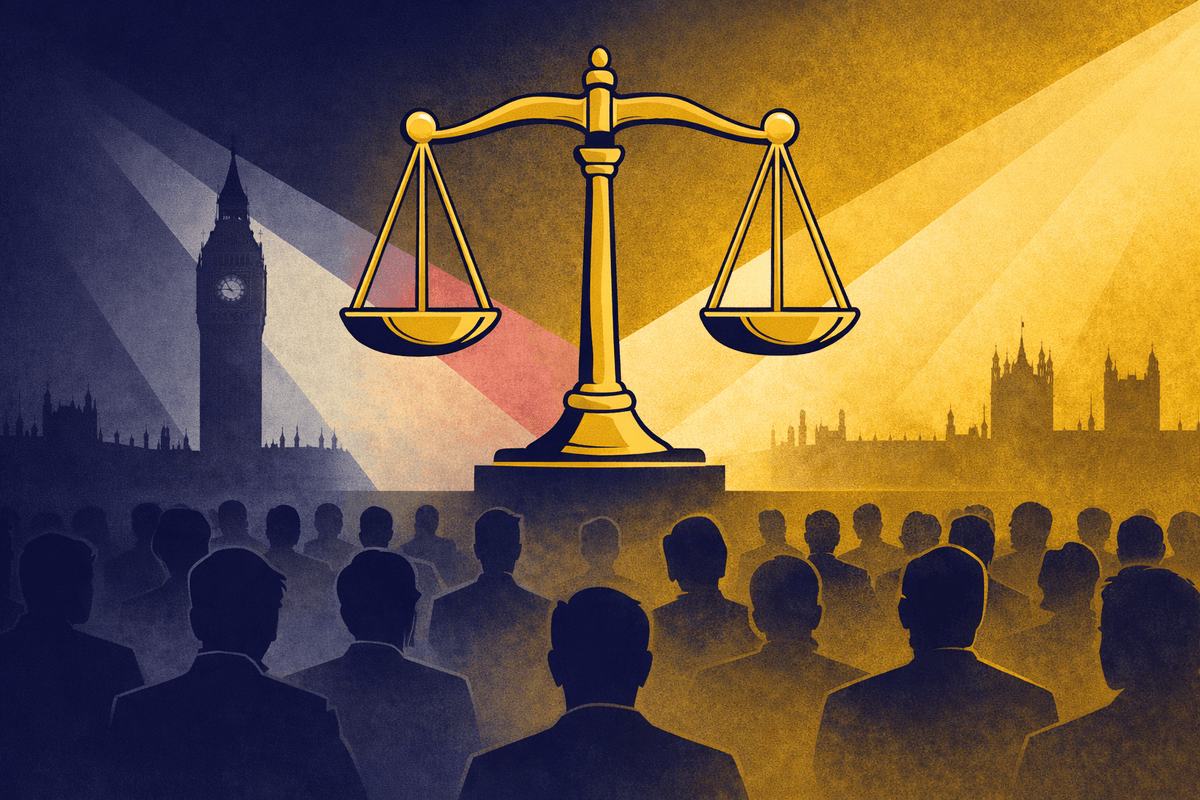
A potentially historic vote could take place in the House ofCommons today that would determine whether Members of Parliament are prepared to make it a criminal offence for themselves, and Members of the House of Lords, to deliberately mislead the public.
At Report Stage of the Public Office (Accountability)Bill (the “Hillsborough Law”), Labour MP Luke Myer has tabledamendments that would extend the new offence of Misleading the Publicbeyond Government Ministers to include MPs and Lords for the first time.
Two questions now hang over Parliament:
Will the Speaker allow the amendment to be put to a vote?
And if so, will MPs vote to criminalise their own lies?
If selected and passed today, the amendment would mark oneof the most significant democratic accountability reforms in modern British history, signalling that Parliament is willing to subject itself to the same legal standards it already plans to impose on Government Ministers.
Luke Myer MP, Member of Parliament for Middlesbrough Southand East Cleveland, said:
“This amendment is a proportionate, carefully safeguardedresponse to a real democratic risk. If politicians deliberately lie to the public, they should be held to account. Democracy only works when truth matters, and voters across the political spectrum expect Parliament to act.”
The amendment has cross-party support. Labour MP IanByrne, Parliamentary Lead for the Hillsborough Law and a survivor of thetragedy, is backing the proposal, alongside Ellie Chowns MP of the GreenParty and Liz Saville Roberts MP of Plaid Cymru.
Under the Bill’s current wording, the Prime Minister,Government Ministers, police officers, civil servants and other public officials could face criminal prosecution for deliberately misleading the
public, while MPs and Members of the House of Lords would remain exempt. Campaigners argue that this exemption would fatally undermine public trust, particularly if Parliament votes to criminalise deception across public life while excluding itself.
The Bill is expected to be considered at Report Stage today.If the amendment is selected by the Speaker and approved by the House, MPs and Lords could, for the first time in modern democratic history, be exposed to statutory criminal liability for deliberate deception of the public.
Jennifer Nadel, CEO of think-tank Compassion in Politics,which has led a seven-year campaign for a law to prevent political deception, said:
“When lies travel faster than the truth, democracy becomesdangerously easy to game. This amendment draws a clear line: deliberately deceiving the public to gain or retain power is not politics as usual, it is an abuse of trust. If Parliament wants to rebuild faith in democracy, honesty in
public life must mean something in law.”
But private prosecutor Marcus Ball assures that thelaw would not criminalise politicians as a matter of course.
“From my own experience privately prosecuting BorisJohnson, I can assure the public that this law would not put politicians inprison with ease. As with any criminal allegation of lying,
prosecutors would have to prove that a statement was knowingly false and
deliberately deceitful, which means cases of this kind will be rare.
That rarity is the point. The purpose of this law is not toimprison large numbers of politicians, but to give them a criminally credible reason not to lie to the public in the first place. If this vote passes, it
will be one of the most important democratic decisions of our time, and a rare signal of hope in a world still scarred by the consequences of political deceit.”
Campaigners argue that, in a global context shaped by thelegacies of Boris Johnson and Donald Trump, today’s decision will be watched far beyond Westminster.
ENDS
CONTACTS
Public Office (Accountability) Bill: https://bills.parliament.uk/bills/4019
(Misleading the Public is the proposed offence in question)
Carolanne Bernard, Parliamentary Communications Officer forLuke Myer MP: 07805 267177
Jennifer Nadel, CEO, Compassion in Politics: 07970 870026
Marcus Ball, Private Prosecutor, Founder of ExecProsec: 07917 086231
Marcus Ball has been working for the criminalisation of lying in politics since 2016, ExecProsec is advised by Lewis Power KC (https://furnivalchambers.co.uk/barrister/lewis-power-kc/) and Colin Witcher (https://churchcourtchambers.co.uk/barrister/colin-witcher/):
Heloise Paul, Director of BD & Marketing, Bates Wells: 0207551 7678
About Bates Wells
The amendments have been developed with pro bono legalsupport from Bates Wells, who advised on parliamentary drafting andsafeguards.
A spokesperson for Bates Wells said:
“The Hillsborough Bill is an important and ambitious pieceof legislation. Bates Wells is proud to contribute to the public debate and development of the Bill by providing pro bono support to Compassion in Politics on these amendments. At a time when trust in democratic systems is declining, it is right to question whether the offence of misleading the public should
expressly apply to parliamentarians and candidates in parliamentary elections.”
Bates Wells is the only law firm with a Roll AParliamentary Agent, authorised to promote private bills in Parliament, and combines this with a top-ranked electoral law, campaigning, and public law
practice. This expertise has enabled Bates Wells to support Compassion in
Politics on these amendments on a pro bono basis.
About Compassion in Politics:
Compassion in Politics is a cross-party think tank working to restore trust, integrity and humanity in public life. It campaigns for evidence-based reforms to strengthen democracy, including laws to deter deliberate political deception. It provides the Secretariat for the All Party Parliamentary Group on Compassionate Politics which is chaired by Kim Leadbeater MP and has nearly 60 parliamentary members.
About ExecProsec
ExecProsec is a UK not-for-profit organisation focused on closing gaps in legal and parliamentary accountability at the highest levels of public office. Its work includes Ball v Johnson (2019), a crowdfunded private prosecution attempt against Boris Johnson that tested the application of misconduct in public office to political deception and established revealing procedural problems within the High Court. ExecProsec has since made detailed parliamentary proposals, including amendments to the Public Office (Accountability) Bill 2025, arguing that deliberate deception of the public should be a criminal offence applying equally to Ministers, MPs and Peers, supported by clear statutory safeguards and independent prosecution.